A decision you didn't know you were making
Getting a mortgage isn't just about the rate — it's about structuring it in a way that actually works for your life.
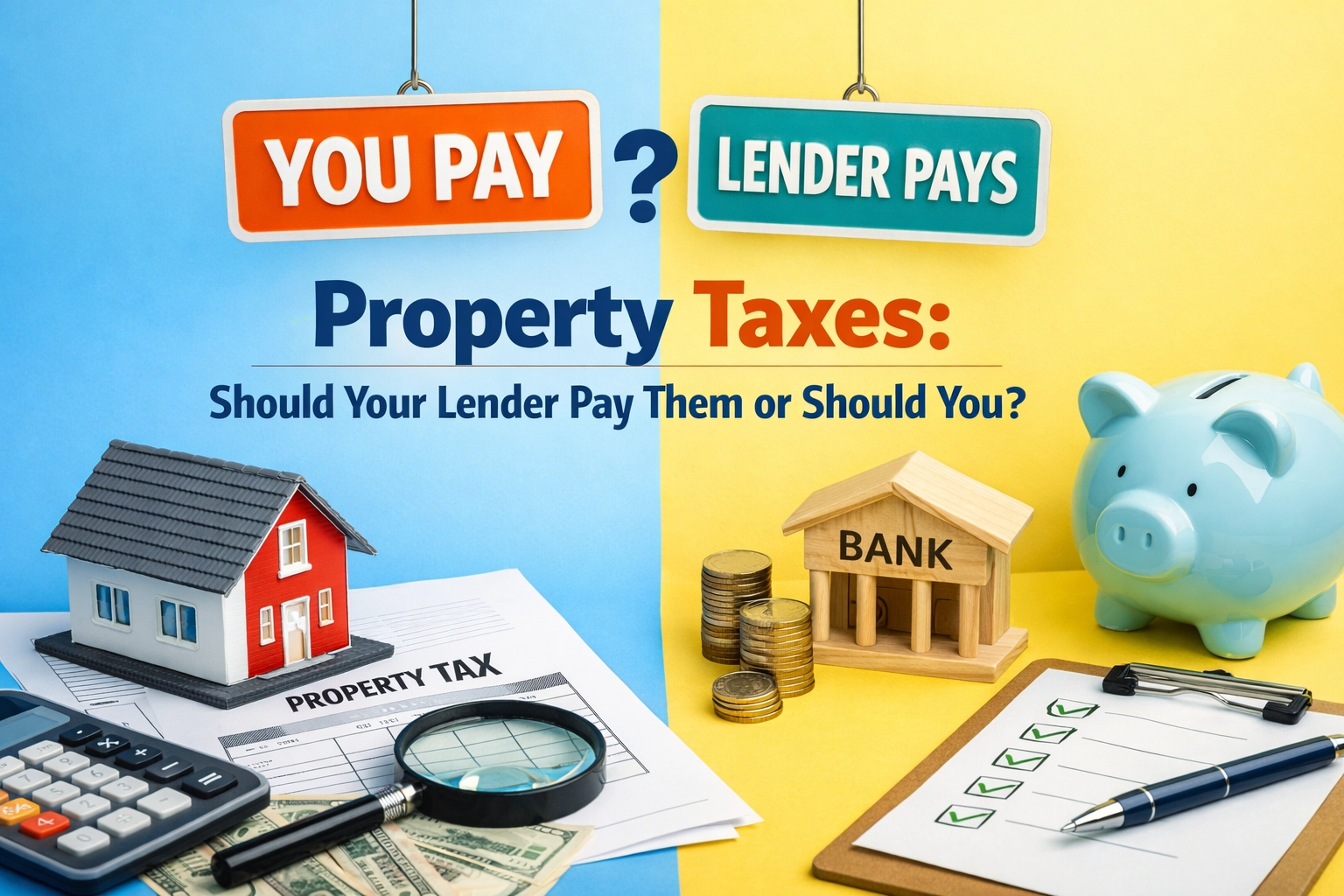
Here's a decision most Alberta homeowners don't realize they're making until closing day: who's actually going to pay your property taxes? Your lender, or you?
This choice matters more than you think. Whether your property tax gets rolled into your mortgage payment or you handle it yourself can have a real impact on your cash flow, your flexibility, and how much control you have over your own money.
Let's walk through both options so you can make the call that makes sense for your situation.
Option A: Let your lender handle it
This is the default for most people. When your lender collects your property tax alongside your mortgage payment, you'll hear it called a P.I.T. payment — that's Principal, Interest, and Taxes all bundled into one tidy monthly bill.
Every month, your lender calculates one-twelfth of your estimated annual property tax and adds it to your mortgage payment. That money sits in what's called a tax account (sometimes called an escrow account in the U.S., but we don't really use that term much in Canada). When your municipality sends the bill — usually once or twice a year depending on where you live in Alberta — your lender pays it directly on your behalf.
Done. You don't lift a finger.
The upside: pure convenience
If you want a 'set it and forget it' approach, this is it. One payment. One withdrawal. No scrambling to remember when Calgary or Edmonton's tax deadline is. No surprise bills in June that blow up your budget.
For a lot of homeowners — especially first-timers or folks who just want simplicity — this is a dream setup.
The downside: your money just sits there
Here's the thing nobody tells you: that money sitting in your lender's tax account earns you absolutely nothing.
Your lender is holding your cash for months at a time, and you're not earning interest on it. Meanwhile, if you were managing that money yourself, you could park it in a high-interest savings account and actually make a few bucks while you wait for tax season to roll around.
Oh, and there's the tax cushion. Some lenders will hold a buffer — sometimes a month or two of extra property tax — 'just in case' your taxes go up. Which, sure, is helpful if taxes do increase… but it also means even more of your money is just sitting there, doing nothing for you.
Option B: Take control and pay it yourself
If you've got at least 20% equity in your home (we'll talk about that magic number in a sec), you usually have the option to handle your property tax on your own. And there are two main ways to do it.
The TIPP: Tax Installment Payment Plan
Most Alberta municipalities — Calgary, Edmonton, Red Deer, Lethbridge, you name it — offer something called TIPP (Tax Installment Payment Plan). It's basically a monthly automatic withdrawal that pulls your property tax directly from your bank account.
You sign up through your city or town, and boom — your property tax gets paid in 12 equal chunks throughout the year, just like the lender-collected method, except you're in control. The money comes out of your account, you see exactly where it's going, and if you're smart about it, you can keep that cash in a savings account earning interest right up until it gets withdrawn.
The lump sum payment (old-school style)
This is how your parents probably did it. Once a year (or twice, depending on your municipality), you get a property tax bill in the mail. You write a cheque. Or you pay online. Done.
The catch? You need discipline. Because if you're not setting aside money every month for that big June or July bill, you're going to feel it when it hits. This method works great if you're already budgeting like a pro or if you get seasonal income (hello, entrepreneurs and commission-based workers).
So which one should you choose?
Let's break down the real pros and cons.
Lender-collected: the pros
Zero mental load. One payment, handled automatically.
No surprises. If your property tax goes up, your lender adjusts your payment gradually — you're not stuck with a massive unexpected bill.
Great for first-timers. If you're new to homeownership and still figuring out budgeting, this takes one variable off your plate.
Lender-collected: the cons
Your money earns nothing. It just sits there in the lender's account.
Less flexibility. You can't pivot or adjust how that money gets used until tax time.
Potential over-collection. Some lenders hold a cushion, which means even more of your cash is tied up.
Self-managed: the pros
You control your cash. Keep it in a high-interest account and earn something on it.
Better visibility. You see exactly where your property tax dollars are going.
Flexibility. If you want to adjust your payment schedule or pay early, you can.
Self-managed: the cons
Requires discipline. Miss a TIPP payment or forget to save for that lump sum? You're in trouble.
You're responsible. No safety net if you don't plan ahead.
Can feel like 'extra work.' Some people just don't want to think about it.
The 20% equity rule (and why it matters)
Here's where things get real: if you put less than 20% down on your home, your lender is almost definitely going to require that they collect your property taxes.
Why? Because when you have less than 20% equity, you're considered a higher-risk borrower. Lenders want to make sure your property taxes get paid because if they don't, the municipality can put a lien on your home — and that's a problem for everyone involved.
Once you hit 20% equity (either through your down payment or by paying down your mortgage over time), you can usually request to switch to self-management. But you'll need to ask your lender — it's not always automatic.
And heads up: even if you qualify to manage your own taxes, some lenders might say no. It depends on their policies. This is one of those things your Alberta mortgage broker (hi, that's us) can help you navigate when you're shopping for a mortgage.
How we help you set this up right
Look, property tax payment setup isn't the sexiest part of getting a mortgage. But it is one of those little details that can make a big difference in how smoothly your homeownership journey goes.
When we're working with clients at Hello Mortgage, we walk through this decision with you during the process — not at the closing table when you're stressed and signing 47 documents. We explain your options, help you understand what each lender allows, and set it up in a way that matches your financial habits and goals.
Because here's the thing: there's no 'right' answer for everyone. If you're a busy professional who values simplicity, lender-collected might be perfect. If you're financially disciplined and want to squeeze every last dollar out of your money, self-management through TIPP could be the smarter play.
We just make sure you're making the choice on purpose, not by default.
It's your money — you should know where it's going
At the end of the day, whether your lender pays your property taxes or you handle them yourself comes down to what gives you peace of mind and what aligns with how you manage money.
Want convenience and automation? Go with P.I.T. payments.
Want control and the ability to earn a bit of interest on your own cash? Go with TIPP or manage it yourself.
And if you're not sure? That's literally what we're here for. Let's talk it through. Book a call, ask the questions, and we'll help you structure your mortgage payment in a way that actually makes sense for you.