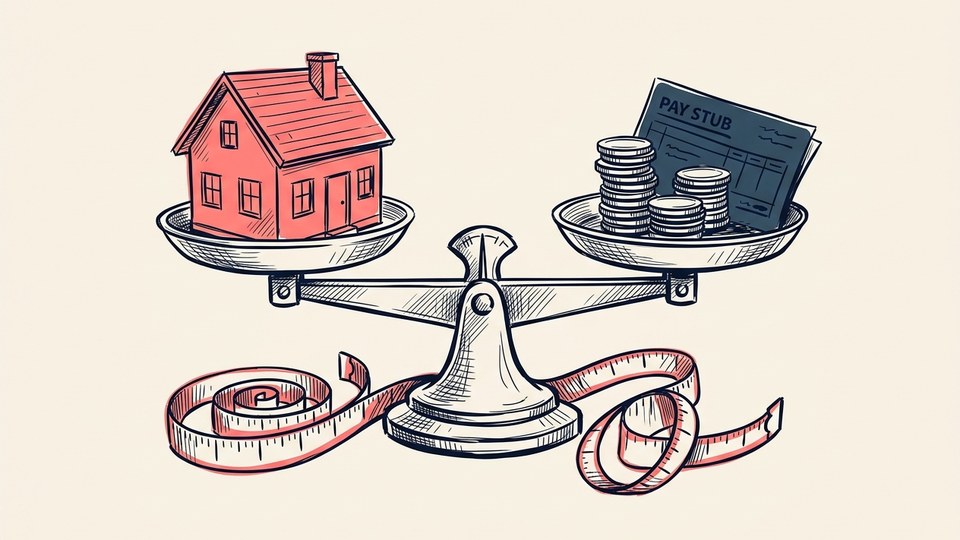
Rates are the headline. Strategy is the story.We compare the whole mortgage — penalties, portability, prepayment — not just the number. How RateWatch+ works
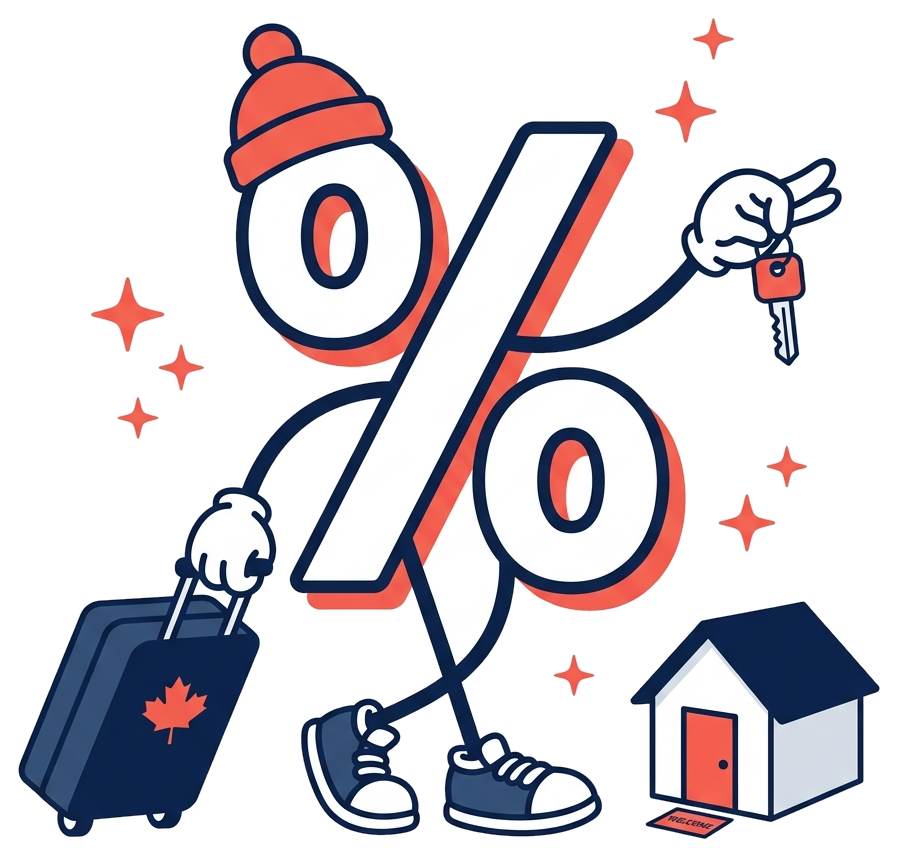
Mortgages for Newcomers to CanadaNew country. New home. Same A-lender rates.
Landed in the last five years—permanent resident or work permit—with a Canadian job and a thin (or empty) Canadian credit file? There's a program built for exactly that. Rent, utilities and a bank letter can stand in for a credit score, money from home counts, and the rate is the same one everyone else gets.
Free conversation. Clear answers. Zero mortgage-speak.
Here's the version you've probably heard at the branch: "Come back when you've been here two years and built some credit." It's wrong. Canada's mortgage insurers run a New to Canada program that most A-lenders offer, and it exists because a person who paid rent on time for a year and shows up to work every day is a good borrower—whether or not Equifax has heard of them yet.
The program is simple once someone explains it. You need to have relocated to Canada within the last five years, hold permanent-resident (or landed-immigrant) status or a valid work permit, and have at least three months of full-time Canadian employment. Permanent residents and work-permit holders can both buy with as little as 5% down. And where a Canadian credit score would normally go, the lender accepts something else: a credit report from your home country, twelve months of on-time rent and utilities, bank statements or a reference letter from your bank back home.
Two things we don't do, so you hear it from us first: we don't use stated income—the program doesn't allow it and neither do we—and we don't count income earned outside Canada. Inside those lines, most newcomers we meet qualify sooner than they were told. Our job is to build the file the way the lender wants to read it, in plain English, and walk it through with your realtor and your lawyer so nothing gets lost in translation—literally or otherwise.
What's the Deal?
Who Qualifies, and For How Much
Three boxes to tick—and the down payment is the same 5% whether you're a permanent resident or on a work permit.
01
The Five-Year Window
The New to Canada program is for people who relocated to Canada within the last five years.
Inside five years: the newcomer rules apply—alternative credit, foreign down payment, the works.
Past five years: lenders expect a normal Canadian credit file by then. If yours is still thin, we have other routes—but the earlier you start, the more doors are open.
Returning Canadians: citizens who lived abroad and came back with no recent Canadian credit often fit the same alternative-credit logic. Ask us.
02
Permanent Residents: 5% Down
PR card or landed-immigrant status, plus a Canadian job, and you're on the same footing as anyone born here.
Minimum 5% down on a home up to $500,000 (10% on the portion above), with mortgage default insurance.
At least three months of full-time Canadian employment. Probation is fine once you're past the three months; a transfer within the same company or field can be quicker.
Same rates: insured A-lender rates—often the lowest on the board—not a "newcomer rate."
03
Work Permits: Same 5% Down
Temporary residents on a valid work permit qualify too, with a little more paperwork.
Minimum 5% down on a one- or two-unit home you'll live in—same as a permanent resident. (Three- or four-unit properties need 10%, for anyone.)
A few extra documents: the insurer asks non-permanent residents for more supporting paperwork—usually the bank statements or reference letter from the credit routes below, plus proof of status. We'll list it on the first call.
A valid permit for the length of the application—and see the foreign-buyer-ban note further down, which sets how much time needs to be left on it.
Study permits alone don't qualify. A post-graduation work permit with a full-time job does.
04
Three Months of Canadian Work
Income is the one part of the file that has to be Canadian.
Salary: counts from the day the job starts, once you've cleared three months. The offer letter and stubs do the work.
Hourly: guaranteed hours on your employment letter count when your stubs show them and your employer confirms them on the lender's call. Extra shifts, overtime, tips and commission need a two-year Canadian history.
Self-employed newcomers: two years of Canadian tax returns, same as any business owner. Until then, a salaried partner's income can carry the file.
The comments · welcome-home edition
Everyone has a theory about newcomers and mortgages. We read the comments.
Three things every newcomer gets told at the branch, and what the lender's program actually says.
11:50100
The New to Canada program, explainedNew country. New home. Same rates.
hellomortgage.ca New country. New home. Same rates. 🍁🏠
Landed in the last five years?…
@landed.in.yegYou need three months of work and a paper trail. That's the program. Canada's mortgage insurers run a New to Canada program for anyone who relocated in the last five years—permanent resident or work permit—with three months of full-time Canadian employment. No credit score required: twelve months of on-time rent plus a utility bill, a bank reference letter, six to twelve months of bank statements, or a credit report from home all stand in for it. An Edmonton couple we worked with bought a $450,000 half-duplex fourteen months after landing, at the same insured rate as anyone else.
@wire.transfer.waleedYour savings count. Your salary from back home doesn't. Two different questions. Down payment: savings abroad are fine—90 days of statements from the foreign account, the wire receipt, and the Canadian statement it lands in. Gifts from family abroad work the same way with a gift letter. Income: only Canadian employment counts toward the ratios, and the program doesn't allow stated income. Start the wire at pre-approval; it can take two weeks.
@pgwp.and.proudWork permits qualify. Same 5% down. Check the days on your permit. Temporary residents on a valid work permit are eligible for the newcomer program with the same 5% minimum down payment as a permanent resident—just a little more supporting paperwork. The foreign buyer ban (in force to January 1, 2027) exempts work-permit holders with at least 183 days of validity left on the permit on the day they buy, for their first purchase. Permanent residents are exempt entirely. We confirm your status with your lawyer before an offer goes in—not after.
Landed in the last five years? Send us three things. Your PR card or permit, your employment letter and your lease. We'll tell you which credit route fits, what your income buys and what month you're ready—usually the same day.
Let's run one. Every newcomer file we take gets this analysis before you shop—because the lender will run it, and we'd rather you see it first.
hellomortgage.caThe Math on a Real Edmonton Couple
1/5
#ShowMeTheMoney
01
The Incomes, Line by Line
A couple in Edmonton, permanent residents for 14 months. He's a warehouse supervisor on a $62,000 salary, eight months in. She's a health care aide at $24 an hour with 37.5 guaranteed hours on her employment letter.
What the branch said: "You need two years of credit history." No number. Come back in a year.
What the lender actually allows: his $62,000 (past three months, salaried), plus her guaranteed hours—$24 × 37.5 × 52 = $46,800—confirmed by her manager on the verification call. $108,800 of qualifying income.
The credit question isn't about income at all. It's a documentation question—and it has four answers (next card).
hellomortgage.ca01 / 05#ShowMeTheMoney
02
The Credit File, Line by Line
They've had one Canadian credit card for ten months. No score worth reporting yet. The program doesn't need one.
Route they used: two Canadian alternative sources with twelve months of on-time payments—rent, confirmed by a landlord letter and twelve months of bank statements showing it leaving the account; and their EPCOR bill, confirmed by twelve months of statements.
Routes they could have used: a strong credit report from home (accepted from the US, UK, Australia or New Zealand); twelve months of bank statements from a recognized Canadian bank or their bank back home; or a reference letter from their home bank confirming six months of good standing.
The rule underneath all of it: every payment on time. One late rent in the twelve months and the route closes—so we check before we pick the route.
hellomortgage.ca02 / 05#ShowMeTheMoney
03
The Purchase, Line by Line
A $450,000 half-duplex in Edmonton, 5% down as permanent residents.
Down payment: $22,500—$14,000 wired from their savings account back home (90 days of statements from that account plus the wire receipt) and an $8,500 gift from her parents with a signed gift letter.
Mortgage: $427,500 plus the insurance premium, 30 years as first-time buyers, roughly $2,250 a month at today's rates.
Closing costs: about $6,500—lawyer, title insurance, adjustments. No land transfer tax in Alberta.
The verdict: approved at the same insured A-lender rate as anyone else, fourteen months after landing. Run your own numbers here.
hellomortgage.ca03 / 05#ShowMeTheMoney
04
Where It Gets Tight
Three things stall a newcomer file more than anything else. All three are fixable with a bit of runway.
A late payment after arriving: a missed phone bill or a 30-day-late card payment on your new Canadian file hurts more than having no file at all. Set every bill to auto-pay from day one.
Money that hasn't landed yet: the down payment has to be in a Canadian account, with the paper trail, before closing. International wires can take a week or two—start early.
Under three months on the job: the file goes in the drawer, not the bin. We pre-approve you the week you clear it. The full newcomer guide.
hellomortgage.ca04 / 05#ShowMeTheMoney
That's all.
Still with us?Let's talk.
You now know more than most people do when they sign with their bank.
Knowing is half the win. The other half is a 15-minute call where we turn it into your plan. Let's go get the W.
hellomortgage.ca Swipe through all 4. Then tap the heart if this made it feel less scary.
Keep It Real
What We Don't Do (and Why That Protects You)
About one newcomer file in five needs a few months of runway before it's ready. We'll say so on the first call—and hand you the plan. Here's where we draw lines.
01
No Stated Income
The New to Canada program doesn't permit stated income, and we don't either.
Why: a mortgage built on a number nobody verified is a mortgage that hurts the first slow month—and the B-lender version costs 20% down, a lender fee and a rate a point or two higher.
What we do instead: qualify you on the letter, the stubs and the guaranteed hours you actually have, and plan the runway if that's not enough yet.
02
No Foreign Income
The salary you earned in Lagos, Manila, Mumbai or Manchester built your savings. It doesn't build your qualifying income.
What counts: Canadian employment income, three months in. Savings from abroad count toward the down payment—just not the ratios.
Remote work for a foreign employer: case by case, and usually not under the newcomer program. Ask us before you assume either way.
03
Bruised Canadian Credit Is the Real Blocker
No file is fine. A bad file isn't.
What the program forgives: having no Canadian credit score. That's the whole point of the alternative routes.
What it doesn't: late payments, collections or a maxed card on the Canadian credit you do have. If that's happened, the fix is six to twelve clean months—we'll map it.
04
The Foreign Buyer Ban (as of September 2026)
Canada's Prohibition on the Purchase of Residential Property by Non-Canadians runs to January 1, 2027. It doesn't stop most newcomers—but you need to know where you stand.
Work-permit holders: exempt if your permit has at least 183 days of validity left on the day you buy and you haven't already bought a home under the exemption.
The fine print moves: the rules have been amended more than once and the ban is set to expire in 2027. We confirm your status with your real estate lawyer before an offer goes in—not after.
Welcome Wagon
Newcomer Advantages Worth Using
The program comes with levers most newcomers never hear about. Used well, they move you from "come back in two years" to keys this season.
01
Credit Without a Credit Score
Four routes, and you only need one. Which one depends on your down payment.
5% down (mortgage over 90% of the price): a Canadian or international credit report; or rent confirmed by a landlord letter plus twelve months of bank statements, and at least one utility confirmed by the provider or twelve months of bills. Every payment on time.
10% down or more: a Canadian or international credit report; or a reference letter from your bank at home confirming six months of good standing; or six months of statements from your main account at a recognized Canadian or home-country bank.
Letters in English or French—we'll tell you exactly what each letter needs to say, and send templates.
02
Money From Home Counts
Savings abroad, family gifts across borders—lenders accept both, with the paper trail.
Your own savings overseas: 90 days of statements from the foreign account, the wire receipt and the Canadian statement it landed in. Exchange-rate swings are fine; unexplained deposits aren't.
Gifts from family abroad: a signed gift letter (we supply it), the wire and the deposit. Immediate family only, no repayment.
Almost every newcomer is a first-time buyer in Canada, and the programs stack.
30-year amortization: available to first-time buyers on insured mortgages—about $150 a month lighter on a $400,000 mortgage.
FHSA and the Home Buyers' Plan: up to $40,000 tax-free in an FHSA and up to $60,000 from an RRSP, once you've built the room. The full first-time buyer game plan.
No land transfer tax in Alberta: closing costs run about 1.5% of the price, where Ontario or BC would charge you a five-figure tax on top.
04
Plain English, Start to Finish
Mortgage-speak is a second language for everyone. We translate.
One point of contact who briefs your realtor and your lawyer on the newcomer program, so nobody asks you for a credit score you don't have.
No bankers' hours: evenings, weekends, WhatsApp, text—whatever works around your shifts and your time zone back home.
Every number explained: what insurance premium means, why the stress test exists, what a lawyer does here. You'll never sign something we haven't walked through.
Let's Get Ready To Rumble
How It Works, Start to Finish
Most newcomer purchases in Alberta go from first call to funded in four to five weeks—the extra week is usually the wire from home—and the first step is a document review, not an application. We're paid by the lender, so the review, the pre-approval and the runway plan cost you nothing.
01
The Process, Step by Step
The Conversation:When you landed, your status, your job, where the down payment is sitting and what you're hoping to buy. We tell you in plain terms which credit route fits and where the number lands—and if there's a gap, what closes it.
The Document Review:Employment letter and stubs, your PR card or permit, and whichever credit route we picked—landlord letter, utility statements, bank letter or home-country report. We build the file the way the insurer's checklist reads and pick the lender before anything gets submitted.
Pre-Approval:Rate held for up to 120 days. You shop with a real number, and we start the wire from home now so the money is here before you need it.
Approval:Offer accepted. We submit the full file, the lender verifies employment and the down payment, your lawyer confirms the buyer-ban exemption if you're on a permit, and approval typically comes back in 3–5 business days.
Funding:You sign with a real estate lawyer, the down payment and closing costs are wired, and the keys are yours. Welcome home—for real this time.
02
What We'll Ask You For
Have these ready and we can move at the speed of the market.
Status: PR card or Confirmation of Permanent Residence, or your work permit—plus passport.
Employment letter for each job: position, start date, salary or hourly rate and guaranteed hours. We'll send your manager a template.
Pay stubs: your two most recent, with year-to-date totals; T4 and Notice of Assessment if you've filed a Canadian return.
Credit route documents: landlord letter + 12 months of bank statements, utility or phone provider letter or 12 months of bills, bank reference letter, or an international credit report—whichever route we pick. Letters in English or French.
Down payment proof: 90 days of statements for every account the money touched, here and abroad, plus wire receipts and any gift letter.
The usual: a second piece of ID, and a void cheque from your Canadian account.
The More You Know
Newcomer Guides, Tips and Straight Answers
Short reads from the Strategy Vault — the questions newcomers ask us in their first year, usually after the branch said no.
An extremely kind and professional person who can navigate all the ins and outs of mortgages, always keeping the clients' best interest in mind.
★★★★★— Marcel & Jillian A.Drumheller1 / 147
Newcomer questions · Drumheller
The questions you’re asking. And the ones you should be.
The honest answers.
Yes. Canada's mortgage insurers run a New to Canada program for people who relocated within the last five years. You need permanent-resident or landed-immigrant status or a valid work permit, and at least three months of full-time Canadian employment. A Canadian credit score is not required—rent, utilities, bank statements or a report from your home country stand in for it.
As little as 5% on a home up to $500,000 (10% on the portion above), with mortgage default insurance—and that's the same whether you're a permanent resident or on a work permit, as long as it's a one- or two-unit home you'll live in. Three- or four-unit properties need 10% down for anyone. The money can come from savings abroad or a family gift, with the paper trail.
One of four routes. A strong credit report from the US, UK, Australia or New Zealand; two Canadian alternative sources showing twelve months of on-time payments (rent confirmed by your landlord plus a utility, phone or insurance bill); twelve months of bank statements from a recognized Canadian or home-country bank (six months if you're putting 10% or more down); or a reference letter from your bank at home confirming six months of good standing. Letters must be in English or French—we send templates.
Yes—same 5% minimum down payment as a permanent resident, a valid permit and a little more supporting paperwork (bank statements or a reference letter, plus proof of status). Study permits alone don't qualify, but a post-graduation work permit with a full-time job does. Under the foreign buyer ban (in force to January 1, 2027) your permit needs at least 183 days of validity left on the day you buy, and it has to be your first purchase under the exemption—we confirm this with your lawyer before an offer goes in.
No. Qualifying income has to be Canadian employment income—salary from the day the job starts once you've cleared three months, or guaranteed hours confirmed on your employment letter and stubs. Foreign savings absolutely count toward the down payment; foreign salary doesn't count toward the ratios.
Until month three, yes—the program requires three months of full-time Canadian employment. Your file goes in the drawer, not the bin: we prepare everything now and pre-approve you the week you clear it. A transfer within the same company can sometimes move faster.
Yes. Lenders want 90 days of statements from the foreign account, the wire receipt and the Canadian statement it lands in. Exchange-rate changes are fine; large unexplained deposits aren't. International wires can take one to two weeks, so we start the transfer at pre-approval, not after the offer.
Yes. Immediate family can gift part or all of it with a signed gift letter (we supply the form), the wire and the deposit into your Canadian account. The gift can't be a loan in disguise—no repayment expected.
Not with us. The New to Canada program doesn't permit stated income, and B-lender alternatives cost 20% down, a lender fee and a rate a point or two higher. If the documented number isn't there yet, we tell you exactly what month it will be and keep the file warm.
That's the one thing the program doesn't forgive. Having no Canadian credit is fine; having bad Canadian credit isn't. A single 30-day late payment usually needs six to twelve clean months before an insured approval. Set every bill to auto-pay from day one.
No—and that's the good news. The program gets you the same insured A-lender rates anyone else gets, which are often the lowest on the board. There's no 'newcomer premium.'
Your PR card (or Confirmation of Permanent Residence) or work permit plus passport; an employment letter for each job with salary or hourly rate and guaranteed hours; your two most recent pay stubs (and T4/Notice of Assessment if you've filed); the documents for your credit route—landlord letter and 12 months of bank statements, a utility or phone letter or 12 months of bills, a bank reference letter, or an international credit report; 90 days of down-payment statements from every account here and abroad, wire receipts and any gift letter; and a void cheque.
For the Canadian programs that matter here—30-year insured amortization, FHSA, Home Buyers' Plan—you generally qualify if you haven't owned a home you lived in during the current and previous four calendar years. Owning abroad can affect that, so we'll check your dates before promising the 30-year term.
The document review takes a day or two once we have your status, employment letter and credit-route paperwork; pre-approval follows with a 120-day rate hold. After an accepted offer, lender approval typically comes back in 3–5 business days. Most newcomer purchases fund within four to five weeks of the first call—the extra week is usually the wire from home.
No. The lender pays our fee on purchases and refinances, so the document review, the pre-approval, the templates and the comparison shopping cost you nothing.
Let’s make your mortgage make sense.
Ready to apply—or still figuring out what’s possible? Start with a conversation. No pressure. No mortgage-speak. Just a clear plan.