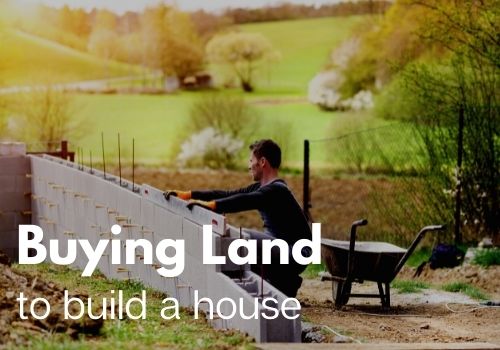
Why buy land and build
If you've been dreaming of escaping unruly neighbours, the noise of the city, or the rules of your homeowners' association, buying land to build your own place makes sense. But it's not a light decision — you'll need to do your homework and dig into the details. Here's what to think about if you're considering it.
Finding the right piece of land
Finding the right spot is step one in building a home that's truly yours. Yes, the farther you go from the city, the cheaper the land gets. But you want a reasonable relationship between what the land costs and what you're planning to build on it.
Don't buy cheap land and then drop an expensive house on it — or the other way around. You'll end up diminishing the value of what you've built.
A good rule: buy land at roughly 20% to 30% of the finished value of your home. So if you're planning to build a $300,000 house, look for land around $90,000.
Check for natural hazards
Your land shouldn't sit in a flood zone or fire zone if you can avoid it. Take the time to check before you buy.
You should also have the soil tested. Its composition and quality can affect the cost of your foundation and any landscaping you want to do down the road.
Zoning and local rules
Counties have bylaws that cover things like law enforcement, animal control, parks, roads, and garbage pickup. Find out what applies where you want to buy.
Pay attention to the area's long-term land use plans and any road projects in the pipeline that could affect your property.
Easements and restrictions
Find out if the land comes with an easement. An easement gives someone else — a neighbour, a utility company — the legal right to use part of your property for a specific purpose, no matter who owns it.
Make sure you know what rights others have to cross your land before you commit.
Get a survey done
A professional surveyor measures the land and maps its exact boundaries. Here's the catch: a survey is only valid for the person named on the certificate.
You'll need a new survey with your name on it. That way you avoid boundary disputes later.
Work with a real estate agent
Some real estate agents specialize in helping buyers find land to build on. Their expertise can help you spot potential issues before they become problems.
An agent can assess the site and tell you if anything might bite you later. They can also help figure out whether the size of what you want to build fits the zoning rules and land-to-building ratios.
Financing your land purchase
Costs vary depending on location, how much land you're buying, and what kind of house you're planning. Just like buying a house, it pays to shop around for your mortgage options.
It's usually easier to get financing for a partially serviced lot — one that already has some utilities in place. Raw land is tougher because lenders can't use the lot itself as security the same way they would a house.
A mortgage broker can connect you with lenders who specialize in this kind of deal.
Do your homework
Land might look straightforward — what you see is what you get — but there are a lot of moving parts underneath. Check the soil, the zoning, the easements, and the long-term plans for the area.
Do the work up front, and you'll be in a much better position to build the home you want.