The jobs report wasn't good
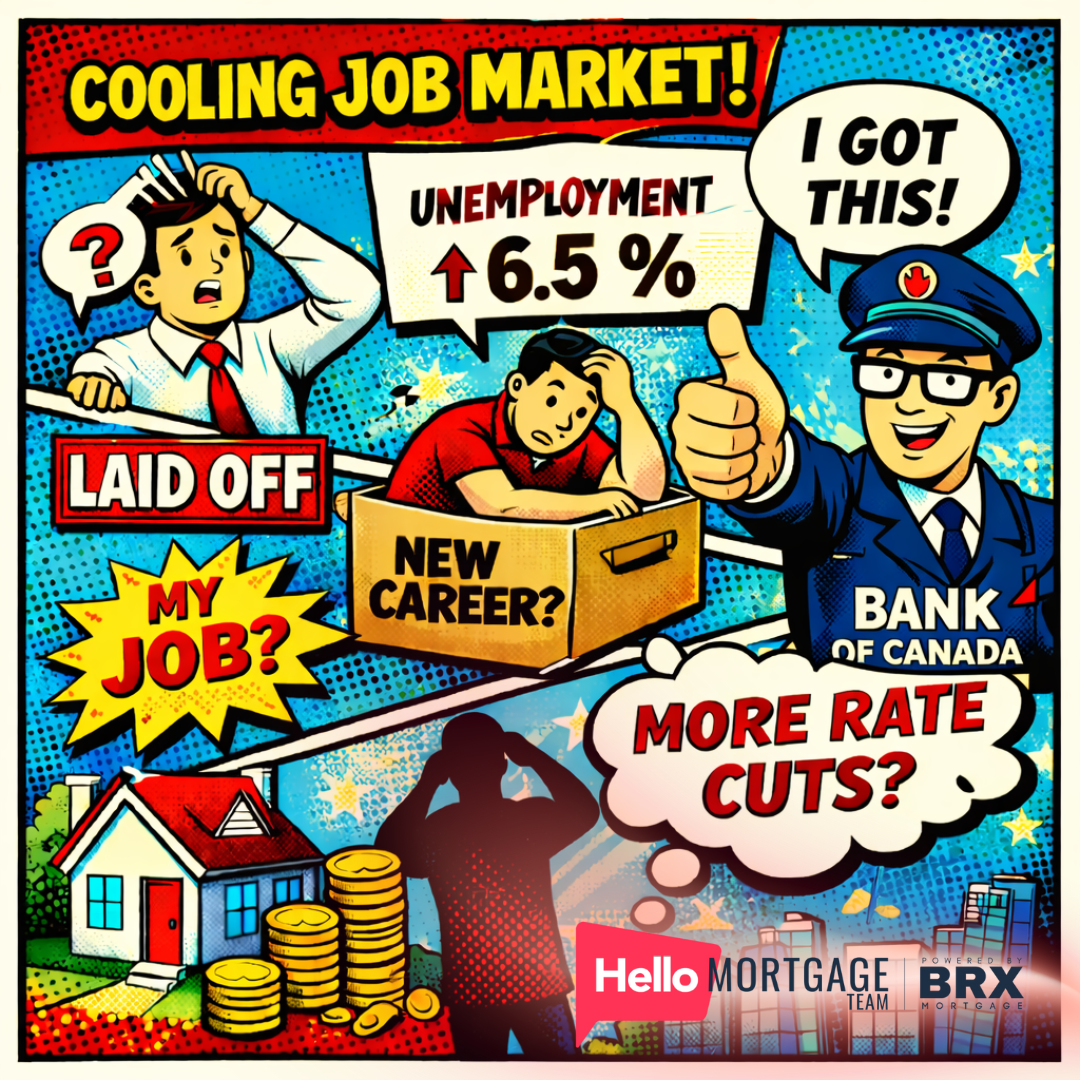
Last week, Statistics Canada reported that the Canadian economy lost 25,000 jobs in January — well below what economists expected.
At first glance, the unemployment rate actually fell from 6.8% to 6.5%. But that improvement came largely because 119,000 Canadians exited the labour force, meaning they're no longer counted as unemployed.
Zooming out, unemployment remains above its long-term average of around 6%, and the broader picture still points to a cooling labour market.
There was a modest improvement in job quality. About 70,000 part-time jobs were lost, partially offset by 45,000 full-time positions. Most of the job losses occurred in Ontario, with manufacturing taking the biggest hit.
Wage growth also cooled slightly, easing from 3.4% to 3.3% year over year.
How the Bank of Canada is reading this
On its own, this employment report probably doesn't change much for the Bank of Canada. In its most recent communications, the Bank said economic conditions are evolving largely as expected.
That said, Governor Macklem recently spoke about how U.S. tariffs are forcing structural changes in Canada's economy, particularly in manufacturing. While those changes can be beneficial long term, he acknowledged that rapid transitions tend to be painful in the short term.
The Bank has used this uncertainty to justify holding interest rates steady, citing concerns that cutting rates too soon could re-ignite inflation if economic weakness is structural rather than cyclical.
Here's where things get interesting.
The case for more cuts, not fewer
Canada has already seen meaningful rate cuts — from 5% to 2.25% — and yet:
Housing markets remain largely subdued. Retail sales have declined in 7 of the last 12 months. There are now roughly three unemployed Canadians for every job opening.
Inflation has returned to the Bank's 1%–3% target range, and shelter inflation continues to cool, which should help offset future price pressures elsewhere.
Despite this, the Bank is forecasting very slow economic growth for the next several years — and recent GDP data is already coming in below that low bar.
I'm not suggesting a return to emergency-level rates. But by the Bank's own definition, today's policy rate sits at the lower end of 'neutral' — meaning it's neither stimulating nor restricting the economy.
With growth slowing and inflation largely under control, it's reasonable to expect more rate cuts over time, not fewer.
What's happening with mortgage rates
Government of Canada bond yields were range-bound again last week, and mortgage rates reflected that stability.
Fixed mortgage rates: unchanged. Variable-rate discounts: unchanged.
Bond markets continue to price in a long pause, with some investors even expecting the next move to be a hike in late 2026.
I still think that's unlikely.
In my view, the longer the Bank delays moving rates to a more stimulative level, the more aggressive it may eventually need to be to correct course.
A quick tip if you're buying your first home
If you're a first-time home buyer, having a clear framework matters more than ever.
I've put together a practical set of guideposts based on years of working with first-time buyers — focused on preparation, decision-making, and avoiding costly mistakes.
It's not about rushing. It's about getting it right.
You can check it out here: The Alberta First-Time Home Buyer's Playbook: 13 Tips to Level Up
Strategy matters more than headlines — and more than the rate alone.