What a Pre-Approval Actually Is (and Isn't)
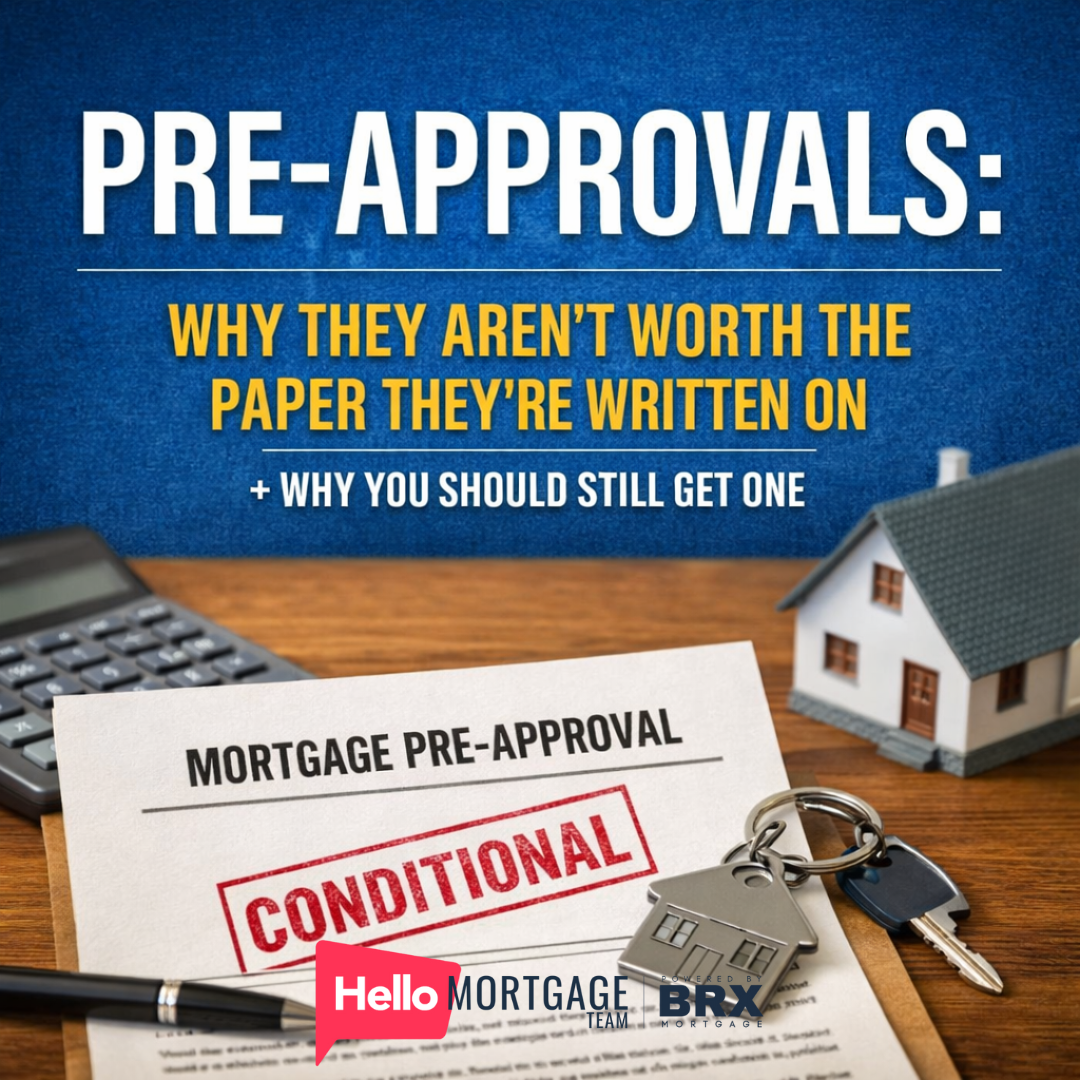
A lot of buyers treat a pre-approval like a promise — a green light from the lender that the money will be there when it's time to close. It's not. From a strict credit standpoint, many pre-approvals aren't worth the paper they're written on.
But that doesn't mean you should skip one. When you use it properly — and choose the right kind — a pre-approval can still be one of the most valuable steps in the home-buying process.
The trick is knowing what you're actually getting, what you're not, and why the how matters as much as the whether.
Why Pre-Approvals Come With So Many Conditions
Pre-approvals arrive with a long list of conditions and qualifiers, and when you think about it that makes complete sense.
At the pre-approval stage, no property has been picked. The lender doesn't know what asset they'll eventually be lending against. In many cases, your income hasn't been fully verified, your debts haven't been reviewed in detail, and documents haven't been underwritten.
With that many unknowns, a pre-approval simply can't be a firm promise to lend.
That's why pre-approvals should really be thought of as conditional assessments, not approvals in the true sense of the word.
So Why Bother Getting One?
Despite their limitations, pre-approvals still serve a purpose.
First, they give you an early check on whether your purchase plans are realistic based on your income and debts. Second, they typically come with a rate hold — usually for up to 120 days — which can protect you if fixed mortgage rates rise while you're shopping.
Think of a pre-approval less as certainty and more as preparation. It's about reducing risk, setting expectations, and avoiding surprises later in the process.
Fixed vs. Variable Pre-Approvals: A Quick Reality Check
Pre-approvals work best with fixed-rate mortgages, because fixed rates can actually be locked in.
If you're pre-approved today for a five-year fixed rate and rates increase before you buy, your original rate can still apply — assuming you continue to qualify.
Variable-rate pre-approvals work differently. Since variable rates move with prime, they can't be locked. The only thing being held is the discount to prime. If the lender later reduces its discount, your pre-approval protects the original one for as long as it remains valid.
Because fixed rates can move quickly — and variable discounts rarely do — many buyers are better off securing a fixed-rate pre-approval, even if you ultimately choose a variable rate once you have a live deal.
Not All Pre-Approvals Are Created Equal
This is where the biggest differences start to show.
At Hello Mortgage, we don't treat pre-approvals as a quick form or a marketing exercise. We underwrite our pre-approvals.
That means we review your credit, liabilities, and income — with real scrutiny. Documents are reviewed, numbers are checked, and the goal is to understand what your full financial picture actually supports.
To be clear, we aren't the lender. Every lender has its own internal policies, guidelines, and quirks. And without a specific property, there will always be a small element of uncertainty that can't be fully eliminated.
But an underwritten pre-approval is miles ahead of options that don't review documents at all.
Many buyers are surprised to learn that even some big banks don't fully underwrite pre-approvals. Instead, numbers are often generated using unverified information — which can lead to a rude awakening later when documents are finally reviewed and the numbers don't hold up.
Why This Approach Matters
A properly underwritten pre-approval significantly reduces the risk of unpleasant surprises once you've found a home.
It also opens the door to conversations most buyers don't even realize they should be having — conversations about things like how different income types are treated, whether existing debts are limiting your options, how future plans could affect what you can afford, and what strategies exist to strengthen your position before you write an offer.
This is where pre-approvals stop being transactional and start becoming strategic.
The value isn't just the number or the rate hold — it's the clarity, planning, and confidence that come from understanding your situation before emotions enter the picture.
The Key Difference Between a Pre-Approval and a Real Approval
The biggest difference is the property.
A mortgage is secured against a specific asset. Until the lender knows what property you're buying, any approval is theoretical.
That's why quick online pre-approvals — especially those that don't ask for documents — should be taken with caution. If very little information has been reviewed, the pre-approval is often more about generating a lead than accurately assessing what you can borrow.
Why Who You Pre-Approve With Matters
One last thing most buyers don't consider: if rates rise after you're pre-approved, you may feel locked into the lender that issued it — even if their mortgage terms aren't ideal.
What starts as a 'free' exercise can quietly turn into a long-term financial relationship.
That's why where you get pre-approved matters just as much as getting pre-approved at all. Mortgage contracts vary widely when it comes to penalties, prepayment options, rate conversion terms, and how the mortgage is registered on title.
A good pre-approval considers all of that — not just the rate.
The Bottom Line
Pre-approvals aren't guarantees. They're conditional, imperfect, and often misunderstood.
But when done properly, they're still a smart step in the buying process.
The goal of a pre-approval isn't certainty. It's clarity, preparation, and better decisions.
And that's how you make it worth more than the paper it's written on.