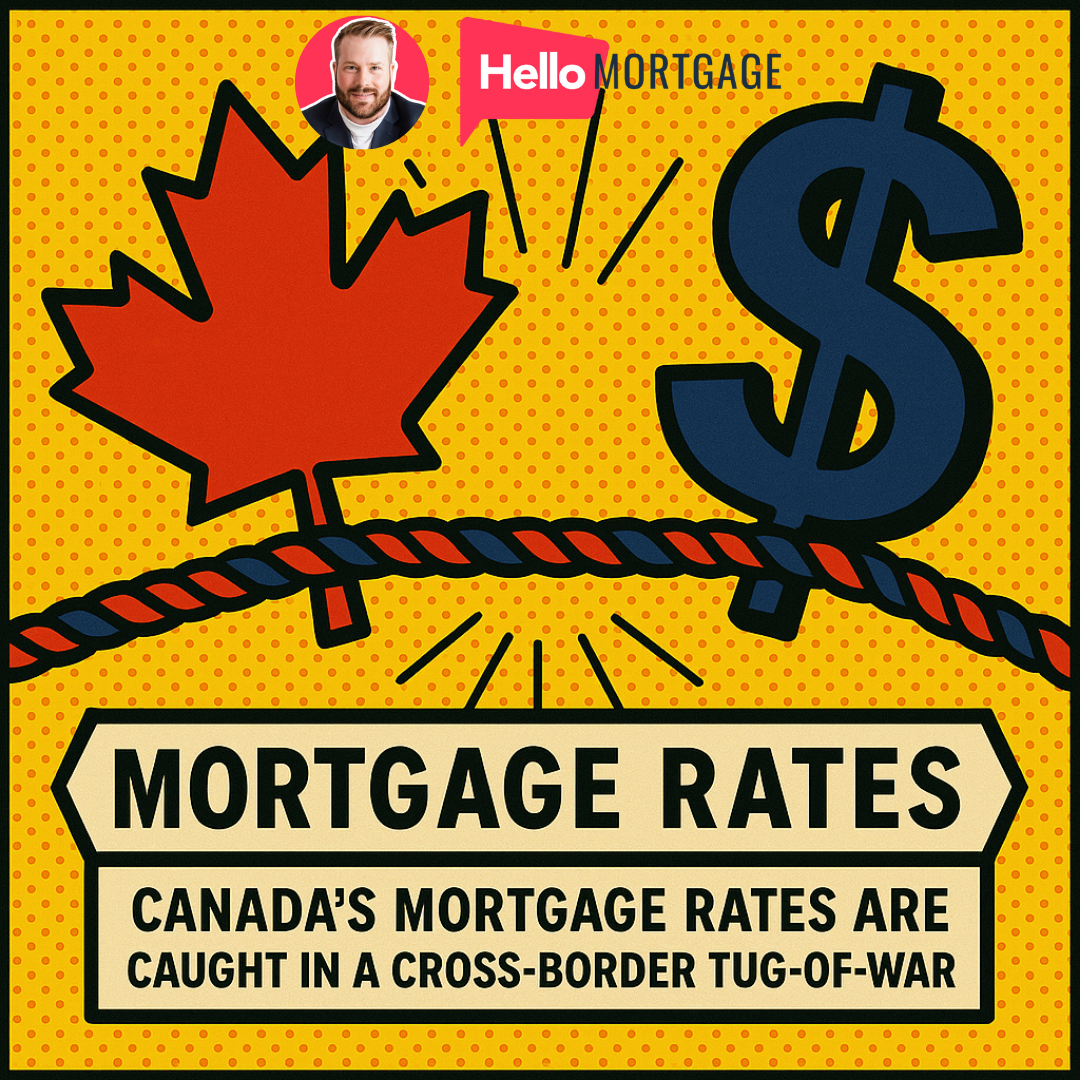
The cross-border tug-of-war affecting your mortgage rate
As we settle into July, you might be wondering why we haven't seen more movement from the Bank of Canada on interest rates—especially with inflation easing here at home. Part of the answer lies just south of the border. If you're buying, selling, or coming up for renewal, this cross-border push and pull is worth watching.
So far, Canada's economy has been flashing the kinds of signals that typically encourage rate cuts: GDP is slowing, retail sales are trudging along, and June's job numbers hinted at a softening labour market. Plus, our inflation pressures—while still present—have started to cool. That's a compelling case for more rate relief from the BoC.
But then… there's the U.S.
Why U.S. strength is pushing Canadian rates higher
The American economy posted stronger-than-expected job growth in June, giving their central bank more confidence to play it cool before making additional cuts. In parallel, a massive budget bill—with plenty of fiscal stimulus baked in—is expected to keep inflation stubbornly high. Bond markets have responded accordingly, pushing U.S. yields higher—and pulling Canadian bond yields up along with them.
Why does that matter? Because fixed mortgage rates in Canada are directly tied to the bond market. Even if Canada wants to chart its own course, international investor sentiment often trumps what's happening here at home—at least for a time.
That's why, despite signs of softening in our economy, fixed mortgage rates remain fairly resistant to meaningful declines. In fact, yields appear to be range-bound for now, but the risk of a bounce higher is growing. If the U.S. avoids rate cuts too long—or that stimulus bill ramps up inflation faster than expected—we could see Canadian borrowers paying the price in the form of climbing fixed rates.
What this means for your next move
If you're buying soon: Lock in a rate hold. Fixed rates are still below historical averages, but that window may not stay open for long. Rate holds last 90 to 120 days, so even if you're on the fence, it's smart to get one in place today.
If you're renewing: Don't auto-renew with your lender. With fixed and variable options in flux, it's a perfect time to strategize. I can help you compare—not just rates, but penalties, flexibility, and contract fine print.
If you're in a variable already: Hold steady.
This week's strategy tip
A lower mortgage rate isn't just about saving money—it's about buying flexibility. Even a quarter of a percent difference can mean the freedom to choose faster repayments, emergency funds, or that renovation you've been waiting on. Don't just rate hunt—plan with purpose.