The backstory: why summer heat isn't the only thing that's sticky
We're in that time of year when the summer heat is finally losing its edge—but unfortunately, inflation isn't cooling off as much as we'd hoped. And while most of the things that move your mortgage rate are homegrown, this week's shift is largely coming from south of the border—and it's already affecting what you'll pay here.
Fixed mortgage rates in Canada have nudged higher once again, and the reason goes back to something that didn't even happen here.
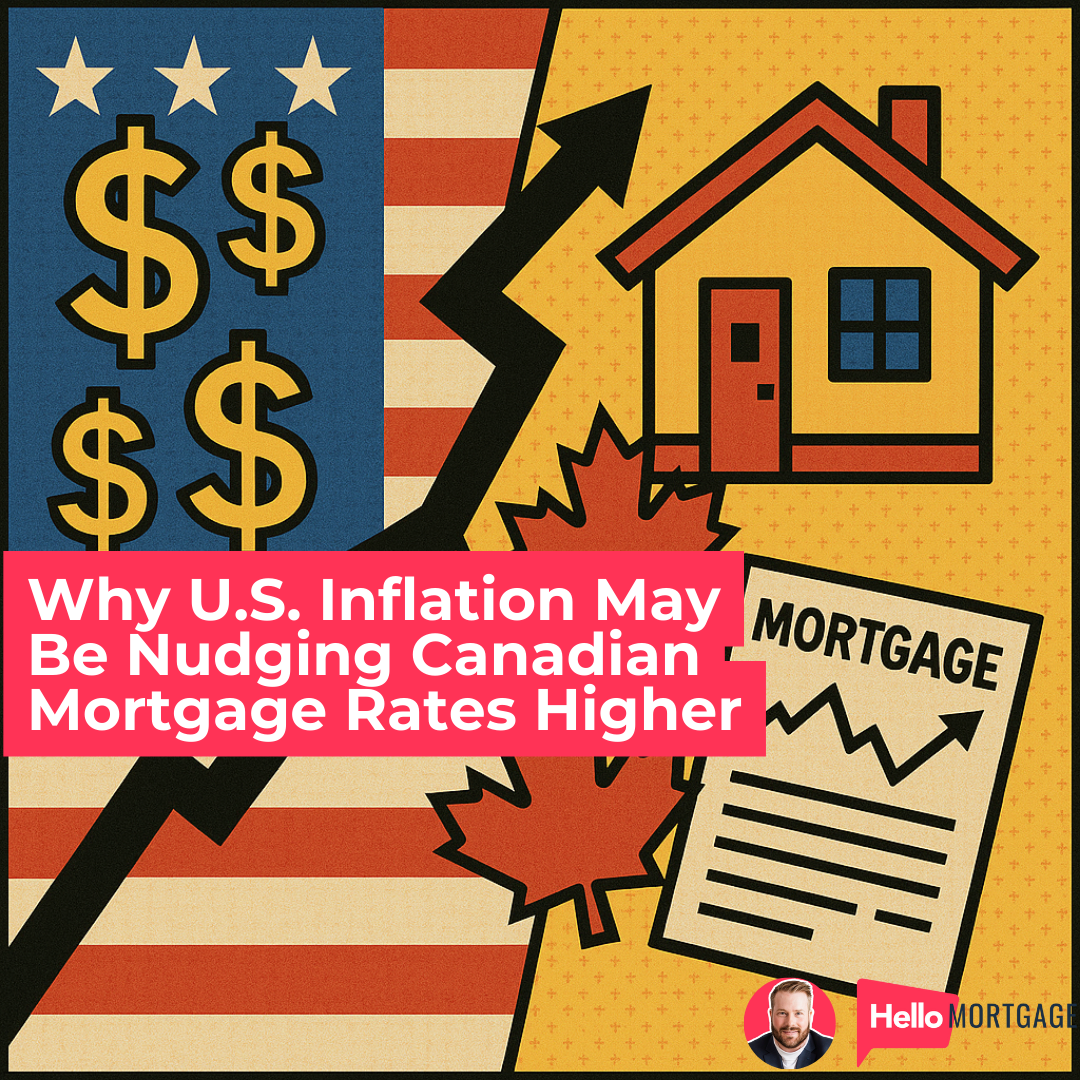
Last week's U.S. data showed that inflation is proving stickier than expected, particularly on the cost of services and now, increasingly, goods. The U.S. Producer Price Index (which tracks what wholesalers pay before prices even hit retail shelves) jumped 0.9% in a single month—a number that caught markets off guard. Even more intriguing? Core inflation is rising, despite relief that tariffs haven't fully blown up consumer prices (yet).
This has put bond markets on edge. While short-term expectations still lean toward a coming U.S. Federal Reserve rate cut in September, investors are also nervous: if that cut goes through while inflation is trending up, longer-term U.S. bond yields are likely to rise. That's exactly what we saw late last week—and Canadian bond yields followed right along.
What that means for your mortgage
Because your fixed mortgage rate is largely priced off Government of Canada (GoC) bond yields, the uptick in U.S. bond yields flowed straight into ours, pushing fixed rates higher across the board here at home.
At this point, the lowest available three- and five-year fixed rates are sitting at roughly the same level. That makes five-year terms especially attractive right now—you get more rate stability with no premium. And while variable rates haven't moved, they remain a long-game strategy that requires some comfort with uncertainty.
Variable mortgage rates are still likely to beat fixed over a full term—but only if you can stomach a bit more movement along the way. The Bank of Canada is now pegged by markets to cut rates later than originally expected, with just a 35% chance of a cut at the next meeting. If our domestic CPI data (due this Tuesday) comes in soft, those odds might shift. Stay tuned on that one—we'll break it down next week.
Your strategy breakdown
If you're eyeing your next mortgage move, here's the strategy breakdown:
→ Buying soon? Fixed rates are creeping up. If your budget is tight or you want payment stability, consider locking in a five-year term. There's solid value there today.
→ Coming up for renewal? Now's the time to run the numbers. Even if your lender offers you what seems like a 'competitive' rate, we're seeing big differences between institutions. It could cost you thousands not to shop around.
→ Holding a variable rate? If you're still comfortable with some short-term rate fluctuations, staying put might remain the cheapest long-term option—but the payoff likely won't be immediate. Make sure your budget has some buffer.
→ Thinking big picture? There are strategies that can turn your mortgage interest into a tax-deductible expense—though they're not for the faint of heart. If you're serious about building wealth through real estate or investments, let's chat about how advanced structures like The Smith Manoeuvre might fit into your broader plan.
Tip of the week
Don't fixate only on the rate. As mortgage rates fluctuate, now more than ever it's crucial to understand the terms behind the number. Prepayment penalties, portability options, refinance flexibility—these can have a significantly bigger financial impact than a minor rate difference.