Two Central Banks, One Big Week
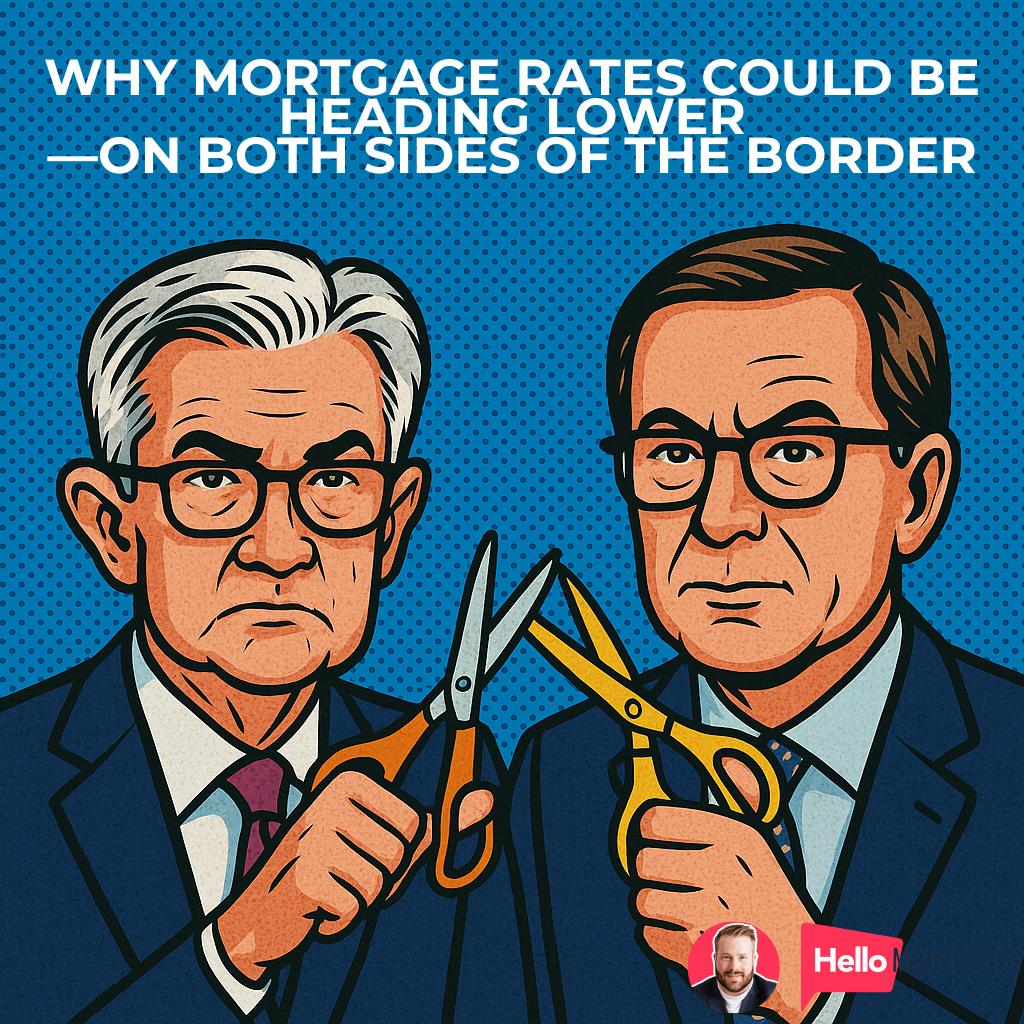
This Wednesday, both the Bank of Canada (BoC) and the U.S. Federal Reserve will announce their latest rate decisions. While each institution views monetary policy through a different lens—Canada aiming squarely at inflation and the Fed juggling both inflation and employment—they're facing remarkably similar economic signals: weakening job markets and mixed inflation data.
Let's start south of the border. Despite inflation ticking higher in August (with core inflation at 3.1% year-over-year), the U.S. labour market just got a major reality check. Revised numbers wiped out over 1.1 million jobs from previous estimates. That's the biggest downward correction in over 20 years and suggests the Fed may finally step off the rate-hiking treadmill.
Now, why does that matter here in Canada? Because U.S. Treasury yields and Canadian government bond yields tend to move in lockstep. As U.S. yields have slipped on expectations of a pivot, our own bond yields have come down too—dragging fixed mortgage rates lower along with them.
And on the home front? Most market watchers are betting on a BoC rate cut of a quarter of a percent this Wednesday, with odds around 90%—provided inflation plays nice when the latest CPI data drops tomorrow. Even without a confirmed cut yet, a softening economic tone has opened the door.
Fixed or Variable? How to Think About Today's Rates
Some lenders have already started trimming their fixed mortgage rates thanks to the downward pull on bond yields. If the cuts continue, more discounts could follow. Five- and three-year fixed rates are trending neck and neck right now, with both offering fair value—but if you want more stability, that five-year term might give you more breathing room if we run into bumps in 2026 and beyond.
As for variable rates: while they haven't moved yet, the writing is on the wall. The BoC may cut as soon as this week, and more cuts are expected as Canada's economy slows. If you're comfortable with some short-term rate volatility, today's variable rates—still historically high—could offer more savings over time once those cuts start stacking up.
Tip of the Week
Before you focus on rate, focus on readiness. Your credit score still drives your options—especially as lenders get choosier in a shifting market. Pay bills on time, keep balances below 30% of your limits, and check your reports for errors. A stronger score means lower stress—and often lower rates, too.