Mortgage Solutions · Alberta

Payment Relief in AlbertaCreate more monthly breathing room.

A Payment Relief plan looks at your mortgage, home equity, debts and amortization together to show you whether consolidating, re-amortizing, refinancing — or doing nothing — gives you the strongest monthly cash-flow result. Done right, it frees up hundreds a month and rebuilds your credit. Done wrong, it just buys a bigger hole. We'll tell you which one you're looking at, for free.

Free conversation. Clear answers. Zero mortgage-speak.
Payment Relief Plan in Alberta — sweep high-interest debt into one payment

Nobody sets out to carry $60,000 in credit-card, car and line-of-credit debt. It just sort of happens. A slow year, a furnace, a move, a kid in university, a couple of months where the card covered the gap—and one day the minimum payments add up to more than a mortgage payment, and every one of them is mostly interest. If that's where you are, you're not bad with money. You're paying 20% for money, and that's a fixable problem.

Here's the honest version: if you own a home in Alberta with equity in it, there's usually more than one way to get real monthly breathing room. Rolling high-interest debt into your mortgage can be part of it. Resetting your amortization to lower the payment can be another. Often the strongest answer is a bit of both. The point isn't to shuffle debt around—it's to build a mortgage that actually improves your cash flow this month and still makes sense five years from now.

That's what a Payment Relief Plan is for. It starts with your Payment Relief Blueprint: one page that shows what you're paying now, what your mortgage and debts could look like restructured, and the trade-offs between each option.

Below is everything we'd walk you through on a first call: what a Payment Relief Plan actually is, the math with real numbers, when it's a bad idea (and what to do instead), and what the process looks like from your kitchen table. No mortgage-speak. Promise.
What's the Deal?

What a Payment Relief Plan Actually Is

It's a refinance with a purpose. You replace your current mortgage with a bigger one, and the difference pays off your other debts on closing day—directly, through your lawyer, so they're actually gone. What's left is one mortgage, one payment, one rate. Refinancing in general is explained here; this page is about using it to get out from under expensive debt.

01

One Payment, One Rate

The credit card, the car loan, the line of credit and the "buy now, pay later" balance all get paid out at once. From then on you have a single payment, on a single date, at a rate that's a fraction of what the cards charge.

  • What can go in: credit cards, unsecured lines of credit, car and truck loans, personal loans, CRA balances, payday loans, and most consumer debt with a payout statement.
  • What usually can't: a second mortgage you took privately can, but it's priced differently; student loans can, though the interest is sometimes already low enough to leave alone.
02

The 80% Rule

In Canada you can refinance up to 80% of your home's appraised value. Own a $500,000 home with $320,000 left on the mortgage? You could borrow up to $400,000 in total—$80,000 of room to clear debt. The appraisal sets the number, not what your neighbour's house sold for.

  • Alberta appraisals: usually $300–$450, paid up front—and you get it back. Every Payment Relief Plan earmarks part of the new proceeds to reimburse your appraisal and cover your legal and closing costs, paid to you by the lawyer on closing day.
  • What counts against the 80%: your current mortgage plus any HELOC or second mortgage already secured on the home.
  • Not enough equity? There are still options—more on that in the "when it's a bad idea" chapter below.
03

Why It Beats a Consolidation Loan or a Proposal

Banks sell unsecured consolidation loans at roughly 9%–14% over three to five years, which is better than a card but still a big payment. A consumer proposal wipes out part of the debt, but it sits on your credit report for up to three years after you finish paying it, and most lenders won't touch a mortgage application in between.

  • Mortgage rate vs. loan rate: your debt is secured by the house, so the lender prices it like a mortgage. Today's refinance rates are here—compare them to the 20.99% on the back of your card statement.
  • Your credit stays yours: a consolidation mortgage doesn't leave a mark. The balances drop to zero, the payments stop being late, and your score starts climbing instead of falling.
  • The exception: if the debt is bigger than your equity and your income can't carry it, a proposal or a licensed insolvency trustee may genuinely be the right call. We'll tell you that too, and point you to someone good.
The comments · debt edition

Everyone has a debt opinion. We read the comments.

Three things people say about rolling debt into a mortgage, and what actually happens when you run the math.

11:50100

hellomortgage.ca Five payments at 20%. Or one at a mortgage rate. ✂️ What have you heard…

Comments

  1. twenty.five.years.tho9h

    Rolling debt into your mortgage just means paying it off for 25 years.

    Reply
    hellomortgage.ca9h · Author

    @twenty.five.years.tho Only if you make the minimum payment. Nobody said you had to. The amortization is a ceiling, not a sentence. Keep paying what you were paying on the cards—or half of it—as a mortgage prepayment and the consolidated debt is gone in a few years at a quarter of the interest. Most lenders allow 15%–20% in prepayments a year without penalty. The 25 years is there for the month the furnace dies, not for every month.

    Reply
    yeg.budget.mom9h

    @hellomortgage.ca 🙌 'a ceiling, not a sentence'

    truck.payment.tyler9h

    @hellomortgage.ca 👏👏

  2. my.bank.guy.said7h

    A consolidation loan from the bank does the same thing.

    Reply
    hellomortgage.ca7h · Author

    @my.bank.guy.said Same idea. Roughly double the rate. Unsecured consolidation loans run about 9%–14% over three to five years—better than a card, still a heavy payment. A mortgage rate is lower because the debt is secured by your home. The trade-off is you need equity and a full qualification, and you're adding to the balance on the house, so we run both versions side by side and show you the monthly and the lifetime number.

    Reply
    sherwood.park.sam7h

    @hellomortgage.ca 🔥 side by side

  3. proposal.pat5h

    Just do a consumer proposal. Debt's gone, done.

    Reply
    hellomortgage.ca5h · Author

    @proposal.pat Gone from your statement. Not from your credit report. A proposal stays on your credit for up to three years after you finish paying it, and most lenders won't consider a mortgage in between. If you have equity, consolidating keeps your credit intact and your score starts climbing the month the balances hit zero. If the debt is bigger than your equity and your income can't carry it, a proposal may genuinely be right—we'll say so and point you to a licensed insolvency trustee we trust.

    Reply
    kp.northside5h

    @hellomortgage.ca 👏 honest

    calgary.condo.kate5h

    @hellomortgage.ca 🙏

  4. hellomortgage.caPinned · Author

    Want the before-and-after on your debts? Send us the balances and your mortgage statement. One page, both columns, no judgement—and if consolidating doesn't win, we'll say so.

    Reply
Ask us about your debts…Post
Show Me The Money!

The Math, With Real Numbers

This is the chapter that turns "I think this makes sense" into "I can see it." Every Payment Relief Plan we do starts with a one-page comparison: what you're paying now, what you'd pay after, and where the difference goes.

Hello Mortgage
hellomortgage.caThe Math, With Real Numbers
1/4
#ShowMeTheMoney
01

The Interest You Stop Paying

Take $40,000 of credit-card debt at 20%. That's roughly $8,000 a year in interest—$667 a month that buys you nothing. The same $40,000 at a mortgage rate costs a fraction of that, every single year it's outstanding.

  • A typical Alberta example: $25,000 on cards at 20.99%, a $22,000 truck loan at 8% and a $13,000 line of credit at 10%. That's $60,000 of debt and about $1,525 a month in minimum payments.
  • Rolled into a mortgage at today's rates over 25 years, the same $60,000 adds about $335 a month to your mortgage payment.
  • The difference: roughly $1,190 a month back in your account. Every month.
hellomortgage.ca01 / 04
#ShowMeTheMoney
02

Your Monthly Cash Flow

The freed-up money is the whole point, and what you do with it decides whether this was smart. Our clients usually split it three ways, and we help them pick the mix.

  • Breathe: some of it covers the groceries and gas the cards were quietly covering. That's allowed. That's why you're here.
  • Build: an emergency fund of even $2,000–$3,000 is what keeps the cards empty the next time the furnace goes.
  • Attack: put part of it back on the mortgage as a prepayment and the "25 years" objection disappears. $600 a month extra on that $60,000 clears it in about nine years, not twenty-five.
hellomortgage.ca02 / 04
#ShowMeTheMoney
03

Your Credit Score, Rebuilt

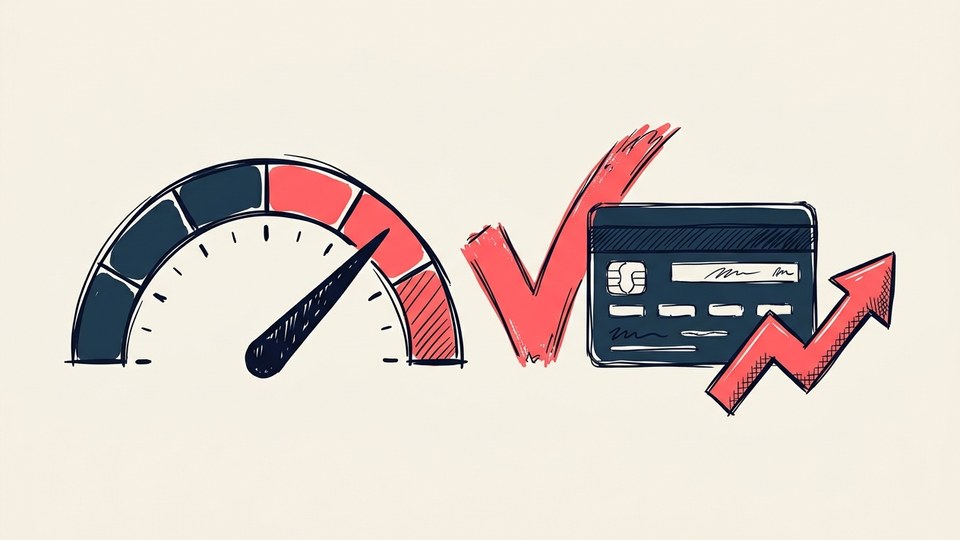
Credit scores are mostly two things: do you pay on time, and how much of your available credit are you using. Consolidating fixes both on the same day.

  • Utilization: maxed-out cards are the single biggest drag on a score. Paying them to zero—while keeping them open—drops your utilization to nothing and the score responds within a couple of statement cycles.
  • On-time history: one mortgage payment is easier to make on time than five scattered ones, and it reports as a mortgage, which lenders like to see.
  • What it sets up: a better score at your next renewal means a better rate on the whole mortgage, not just the consolidated part. Five ways to move your score faster.
hellomortgage.ca03 / 04
#ShowMeTheMoney
That's all.

Still with us?Let's talk.

You now know more than most people do when they sign with their bank.

Knowing is half the win. The other half is a 15-minute call where we turn it into your plan. Let's go get the W.

Let's Get This Going
hellomortgage.ca04 / 04

hellomortgage.ca Swipe through all 3. Then tap the heart if this made it feel less scary.

Keep It Real

When It's a Bad Idea (and What to Do Instead)

We turn down about one Payment Relief Plan in five. Sometimes the better answer is to wait, preserve a great existing mortgage, use a HELOC, change the amortization, or leave things alone entirely.

01

The Refill Trap

The most common way a consolidation goes wrong has nothing to do with the mortgage. The cards get paid to zero, and eighteen months later they're full again—except now the old debt is on the house too. The plan only works if the spending that built the debt changes with it.

  • Honest question we'll ask: was this debt a one-time event (a divorce, a layoff, a medical year) or a monthly pattern? One-time debt consolidates beautifully. Pattern debt needs a budget first.
  • Practical guardrails: lower the card limits after payout, keep one card for emergencies, and automate the prepayment before the money can wander.
02

The Penalty Check

Consolidating mid-term means breaking your current mortgage, and the penalty can eat a chunk of the savings.

  • Variable rate: almost always three months' interest. On a $320,000 balance at 5%, roughly $4,000.
  • Fixed rate: the greater of three months' interest or the Interest Rate Differential—and the big banks calculate it off posted rates, which can push it into five figures.
  • Near renewal? If your maturity date is inside six months, waiting costs you nothing in penalty and we can hold a rate 120 days out. We run both timelines. Estimate your penalty here.
03

The Amortization Trap

Rolling a $22,000 truck loan into a 25-year mortgage and making only the minimum payment means you'll pay for that truck long after it's gone. The math still favours the mortgage rate—but only if you treat the consolidated debt like the short-term debt it was.

  • The fix: keep the amortization short, or keep paying what you were paying before and let the extra hit the principal. Most lenders allow 15%–20% in prepayments every year without penalty.
  • The rule we use: if you'd be paying more total interest over the life of the mortgage than you would have on the cards, we restructure until you're not.
04

A HELOC Instead

Sometimes your current mortgage is too good to break—a low fixed rate, a brutal penalty, or both. Then we leave it alone and add a second layer.

  • HELOC: a line of credit behind your mortgage, up to 65% of your home's value on the revolving portion (80% combined). Interest-only minimums, pay it down as fast as you like, no penalty to break the first mortgage.
  • Then, at renewal: we fold the HELOC balance into the new mortgage at the good rate, so the second layer is a bridge, not a permanent fixture.
  • Not enough equity for any of it: we'll say so, and we'll talk about what a year of focused paydown, a co-signer or a licensed insolvency trustee could look like. You'll leave the call with a plan either way.
Let's Get Ready To Rumble

How It Works, Start to Finish

Most Payment Relief Plans in Alberta fund within two to three weeks of a first conversation, and the debts are paid out by your lawyer on closing day—not by you, not eventually, that day. We're paid by the lender on almost every Payment Relief Plan, so the advice costs you nothing. If your situation needs a lender that charges a fee, you'll hear the exact number before you decide anything. Here's the whole thing.

01

The Process, Step by Step

  1. The Conversation:Tell us what you owe and to whom, and send a recent mortgage statement. We pull your penalty, estimate your equity and build the one-page before-and-after—usually the same day.
  2. The Plan:You get a plain-English recommendation: full consolidation refinance, re-amortization, HELOC, or "wait for your renewal." With the monthly numbers and the prepayment plan attached.
  3. Approval:We submit to the lender that fits your situation. Income documents, a credit check and an appraisal order. Approval typically comes back in 2–5 business days.
  4. Signing:You meet a real estate lawyer (many do this by video), sign the new mortgage, and give them the payout statements for every debt on the list.
  5. Funding:The new lender pays off your old mortgage and the lawyer pays off every debt directly. From the proceeds we earmarked, the lawyer also reimburses your appraisal and covers the legal and closing costs—so the plan doesn't cost you anything out of pocket. Anything left lands in your account. Five payments become one. You set up the prepayment the same week, while the relief is fresh.
02

What We'll Ask You For

Have these handy and the whole thing moves quickly.

  • Your current mortgage statement (lender, balance, rate, maturity date and remaining amortization).
  • A list of the debts with balances and payments—a recent statement for each is perfect. Don't tidy it up first; we've seen everything.
  • Income proof: recent pay stubs and last year's T4 or Notice of Assessment; two years of returns if you're self-employed.
  • Property details: your tax bill and a rough idea of what the home is worth (the appraisal makes it official).
How it works

We turn “what now?” into “we’ve got this.”

A clear process, real underwriting upfront and a team that keeps things moving.

Talk to real humans.Who come with a plan.

Tell us what you’re trying to do. We’ll ask the right questions, explain what matters and map out the smartest way forward.

Send the paperwork.We do the mortgage math.

Our team reviews everything upfront. Because surprises are fun at birthday parties—not during financing.

Mortgage approved.We keep it moving.

We manage the lenders, conditions and deadlines while keeping you updated when it actually matters.

Straight from Google

Our clients say it better.

Hello Mortgage Team has over 140 ★★★★★ reviews!

Read our reviews on Google

We refinanced to pay off some debts, and Matt made sure we got the best deal possible. He truly had our best interests in mind!

★★★★★— Derek M. & Lisa J.Alberta1 / 145
Payment Relief Plan questions

The questions you’re asking. And the ones you should be.

It's a refinance with a purpose: you replace your current mortgage with a larger one and the difference pays off your credit cards, car loan and lines of credit on closing day. Your lawyer pays each debt directly, so they're actually closed. What's left is one payment at a mortgage rate instead of five payments at five rates—the most common refinance we do in Valleyview.
Up to 80% of your home's appraised value, minus what you still owe. On a $500,000 Valleyview home with a $320,000 mortgage, that's up to $80,000 of room. The appraisal sets the value, so we often order it early to know the real number before you count on it.
Credit cards, unsecured lines of credit, car and truck loans, personal loans, CRA balances, payday loans and most consumer debt with a payout statement. Student loans can go in too, though their interest is sometimes low enough to leave alone. We look at each one and tell you which are worth rolling in.
It depends on the debts, but the pattern is consistent. A typical Alberta example—$25,000 on cards at 20.99%, a $22,000 truck loan at 8% and a $13,000 line of credit at 10%—costs about $1,525 a month in minimums. The same $60,000 at a mortgage rate over 25 years adds roughly $335 to your mortgage payment. That's about $1,190 a month back in your account.
Only if you make the minimum payment, and nobody says you have to. Keep paying what you were paying before—or even half of it—as a mortgage prepayment and the consolidated debt is gone in a few years at a quarter of the interest. Most lenders allow 15%–20% in prepayments a year without penalty. We build that plan in before you sign.
Usually, and by a lot. Unsecured consolidation loans run roughly 9%–14% over three to five years, which is better than a card but still a heavy payment. A mortgage rate is lower because the debt is secured by your home. The trade-off is that you need equity and a full mortgage qualification, and you're adding to the balance on your house—so we run the numbers both ways.
If you have equity, consolidating almost always wins: your credit stays intact and your score starts climbing the month the balances hit zero. A consumer proposal stays on your credit report for up to three years after you finish paying it, and most lenders won't consider a mortgage in between. If the debt is bigger than your equity and your income can't carry it, a proposal or a licensed insolvency trustee may genuinely be right—and we'll tell you that honestly and point you to someone good.
The opposite, in most cases. Maxed-out cards are the single biggest drag on a score. Paying them to zero (and keeping them open) drops your credit utilization to nothing, and the score usually responds within a couple of statement cycles. One mortgage payment is also easier to make on time than five scattered ones.
Variable rate: three months' interest, almost always—roughly $4,000 on a $320,000 balance at 5%. Fixed rate: the greater of three months' interest or the Interest Rate Differential, which the big banks calculate off posted rates and can push into five figures. If your maturity is within six months, waiting costs nothing in penalty and we can hold a rate 120 days out. Send us your statement and we'll calculate it before you decide.
Then we leave it alone. A HELOC behind your mortgage (up to 65% of value on the revolving portion, 80% combined) clears the debt without touching your first mortgage. The rate is higher than a first mortgage but far lower than a card, and at your renewal we fold everything together at the good rate.
Yes. A consolidation refinance is uninsured, so you qualify at the higher of 5.25% or your contract rate plus 2%. The good news: paying off the debts you're consolidating also removes their payments from your debt ratios, which often makes qualifying easier than people expect.
Two to three weeks is typical: same-day penalty and before-and-after math, 2–5 business days for lender approval once your documents are in, an appraisal visit, then a signing with a real estate lawyer (many do it by video). On funding day the lawyer pays out every debt directly and anything left lands in your account.
Usually just the appraisal up front ($300–$450 in Alberta)—and you get that back. We structure every Payment Relief Plan so part of the new proceeds is earmarked to reimburse your appraisal and cover the legal and closing costs. The lawyer disburses it to you on closing day, so the plan pays for itself the day it funds.
On almost every Payment Relief Plan the lender pays our fee, so the advice and the comparison shopping cost you nothing. If your situation needs a lender that charges a brokerage fee—usually a credit or income story a bank won't touch—we tell you the exact amount and why before you decide anything.

Let’s make your mortgage make sense.

Ready to apply—or still figuring out what’s possible? Start with a conversation. No pressure. No mortgage-speak. Just a clear plan.

Let’s Talk Mortgage
Explore Valleyview mortgages

Your Valleyview mortgage questions live here.

Find mortgage help across the Valleyview area, then explore the local buying, renewal, refinancing and specialty mortgage pages that match your plans.